
Collections
-

Karnataka Coffee
Karnataka grows roughly seventy per cent of India's coffee, across Chikmagalur, Coorg and Hassan. Almost everything in this collection comes off estates in the Malnad hills, where the trees grow under a native shade canopy rather than in open sun. That is unusual globally, and it is a large part of why Indian coffee reads as rounded and low in sharp acidity: shade slows cherry ripening, and slower ripening builds sugar without spiking acid.
One practical consequence of monsoon-fed, shade-grown coffee is how it behaves in storage. Keep the bag closed, at room temperature, away from the kitchen window. Refrigerating coffee is the common and expensive mistake, because the bag sweats every time you take it out and condensation on a roasted bean stales it faster than air ever would. Buy a size you will finish inside a month instead of stockpiling, and grind it as you go rather than all at once.
The estates behind these lots are mapped on our Indian coffee estates page.
-

Light Roast Coffee
Light roast means the beans leave the drum before the sugars have caramelised far, usually just past first crack. What survives is what the farm and the process put there: acidity, floral notes, fruit, a tea-like clarity. What you give up is the roasty chocolate character most people associate with coffee in general. Neither is better. They are different amounts of interference between you and the origin.
Light roasts are denser and harder to extract, so nearly every problem you will have with one is under-extraction dressed up as sourness. Grind finer than you think, push the water to 94 to 96C, and give the bag ten to fourteen days off roast rather than seven. Light roasts hold their gas longer and a very fresh one tastes closed and thin. If it is still sharp after that, extend the brew rather than dropping the temperature. These reward filter methods far more than pressure.
The vocabulary here, first crack and density and under-extraction, is explained in our coffee glossary.
-
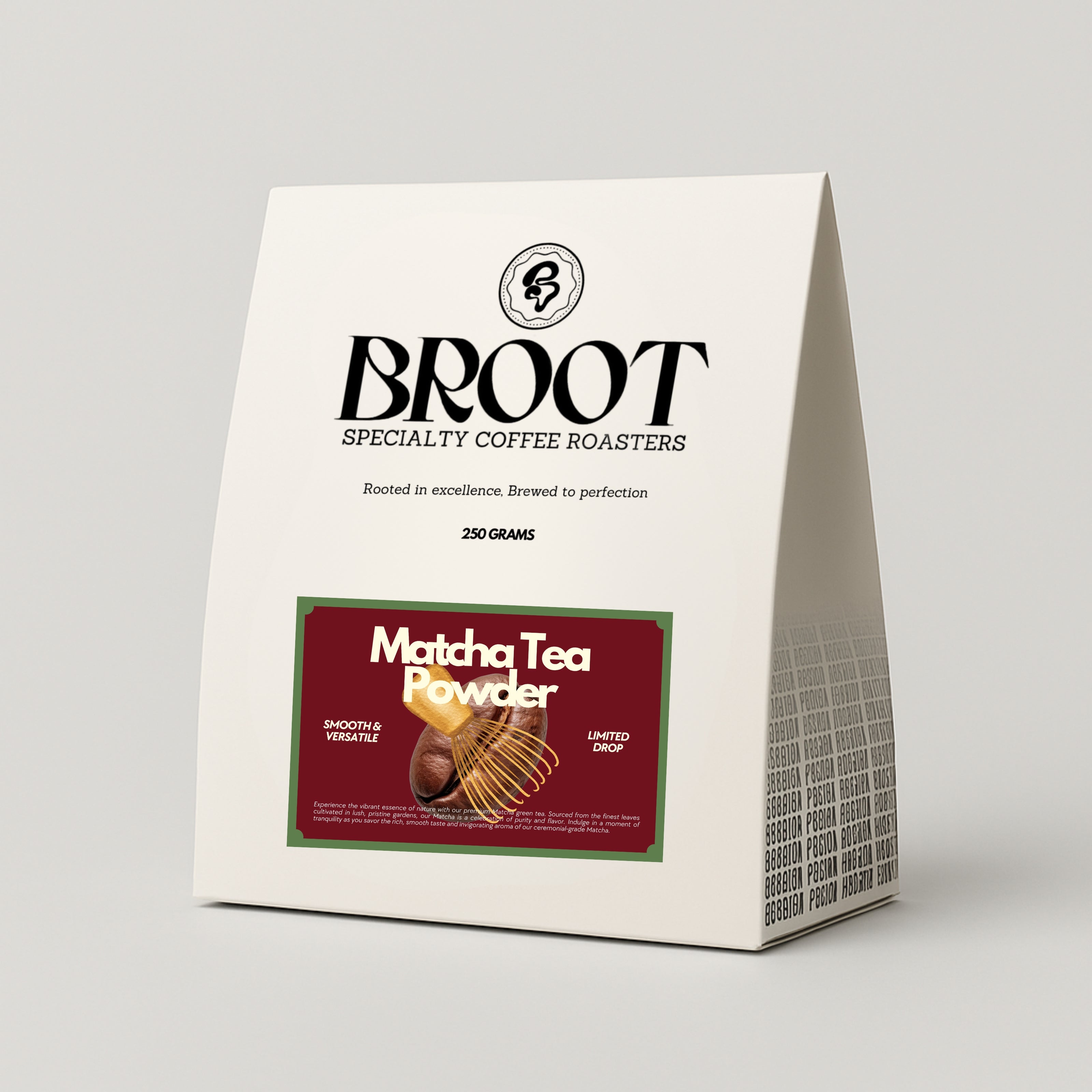
Matcha Powder
Stone-ground Japanese green tea in two grades. Ceremonial first flush for whisking in a bowl — sweet, thick, deeply umami. Café blend for lattes and iced drinks, where you need it to stand up to milk and ice rather than disappear.
Both keep best sealed, cold and away from light. Matcha oxidises faster than coffee — buy small, use it up.
-

Medium Roast Coffee
Past first crack, stopped well before second. That is the whole definition. Sugars have caramelised enough to give sweetness and body, but the roast has not started contributing its own smoke and bitterness. Origin character is still visible, just softened around the edges. This is the range most people mean when they say they want coffee that tastes like coffee.
The practical advantage is tolerance. A medium roast extracts across a wider band than a light one, which means it will still make a decent cup on a machine you have not dialled in, on a grinder that drifts, at whatever temperature your kettle actually reaches. Rest these seven to ten days from the roast date. If you are buying one bag to serve black in the morning and through milk in the afternoon, this is the range that does both without a compromise you can taste in either.
Undecided between roast levels? Find your coffee asks a few questions and narrows it.
-

Microlot Coffees
A microlot is a very small, separately harvested and processed lot — often one block of one farm in one season — kept apart because it is exceptional.
These are the coffees that show what Indian estates can actually do when they are given room to experiment: anaerobic fermentations, yeast cultures, extended natural dries, unusual varietals. Volumes are tiny and they do not come back.
If you want to understand what the fuss is about, brew one as pour over before you try it as espresso.
-
Natural Process Coffee
In a natural, the cherry dries whole with the fruit still on the seed, and only then gets hulled. Sugars from the pulp migrate inwards during drying, so the cup comes out heavier, sweeter and fruitier than the same variety washed: berry, jam, sometimes a fermented depth underneath. It is also the harder process to get right. Badly dried naturals taste of overripe fruit and vinegar, which is why the ones worth buying are traceable to a named estate and a known drying method.
Brew naturals a touch cooler than washed lots, around 91 to 93C, and slightly coarser. They are already high in soluble sugars and it is easy to push them past pleasant into cloying. Give them a longer rest as well, twelve days or more from the roast date, because the fruit-forward volatiles keep developing after roasting and a very fresh natural can taste boozy rather than sweet.
Most of these are single-estate lots; the regions behind them are mapped in Indian coffee estates.
-

Offers
Everything currently discounted, in one place. We do not run permanent sales — a roastery that is always 20 per cent off has simply priced itself wrong — so this page is empty more often than it is full.
What lands here is usually one of three things: a lot approaching the end of its window and better drunk now than held, a bundle that is cheaper than buying the bags separately, or a seasonal offer around Diwali and the festive weeks. Everything is roasted to order like the rest of the range, and the roast date goes on the bag either way. A discounted bag is not an old bag.
If you want the reliable saving rather than the occasional one, a prepaid subscription is the better price per bag, permanently. Or build a Pick Your Five and taste five lots for less than five full bags.
-

Omni Roast Coffee
An omni roast is developed to work as both filter and espresso. One bag, two methods. The roast sits in the middle: taken far enough that the acidity will not tear a shot apart, stopped early enough that sweetness and fruit still show up in a pour-over.
What it costs is the edges. A dedicated filter roast of the same lot would taste brighter and more separated. A dedicated espresso roast would be rounder and thicker in milk. An omni gives up a little of both. What it buys is one bag instead of two, and a coffee that does not fall apart when you change your mind at seven in the morning.
Dial espresso first: 18g in, 36-40g out, 28-32 seconds. Then take the same beans two clicks coarser than your usual filter grind and brew at 1:16, 93°C. Omni roasts are more developed than filter roasts, so they extract faster. Your standard filter grind will overshoot and taste hollow. Start at our grind size chart and move from there.


